

A bumper tap, a monsoon gust that throws debris, or years of Arizona sun can leave one section of your garage door dented, bowed, or rusted while the rest looks fine. The good news is that you often don’t need a whole new door. This guide covers what garage door panel replacement costs in Gilbert, when you can replace just one panel, how color matching works after years of sun fade, and when a new door is the smarter buy.
Yes, in many cases. Most residential garage doors are made of four or five horizontal sections hinged together, and a damaged section can be swapped on its own. It works best when:
• Only one or two sections are damaged, and the tracks, rollers, springs, and cables are sound.
• A matching panel is still available for your door’s manufacturer, model, size, and design.
• The door is reasonably recent. Panels for older or discontinued doors can be hard or impossible to find.
The bottom section is the one replaced most often, because it takes the bumper hits, the irrigation spray, and the weather at ground level.
Panel prices depend mostly on the door type and size. Typical installed prices per section:
| Panel type | Typical installed cost |
|---|---|
| Single-door section, basic steel | $250–$400 |
| Double-door section, basic steel | $300–$500 |
| Insulated steel section | $400–$800 |
| Section with windows, wood-look, or custom design | Quoted after matching, often $800+ |
| Two or more damaged sections | Compare with a new door |
What else moves the price:
• Matching difficulty. Common styles and colors are easier and cheaper to source than discontinued or custom designs.
• Collateral damage. A hard impact can also bend the tracks, crack rollers, or knock the door off track, and those repairs add to the bill.
• Reinforcement. The top section usually carries a strut where the opener attaches. If that section is bowed, a new strut is sometimes the fix rather than a new panel.
For other repair prices, see our garage door repair cost guide.
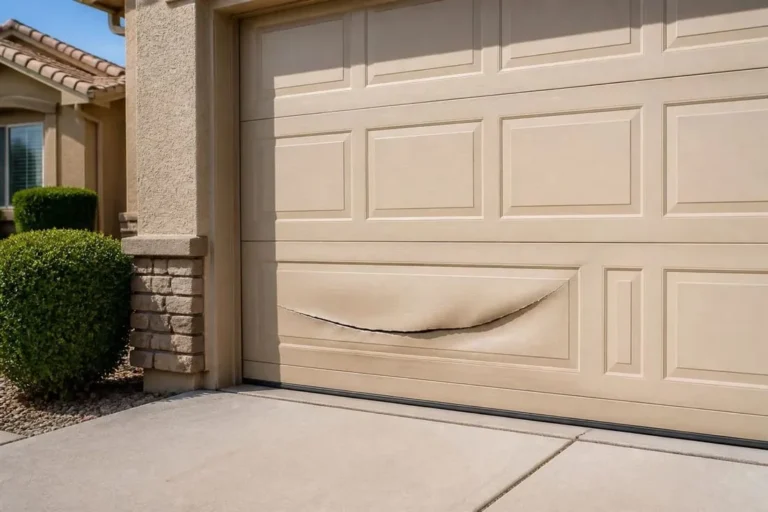
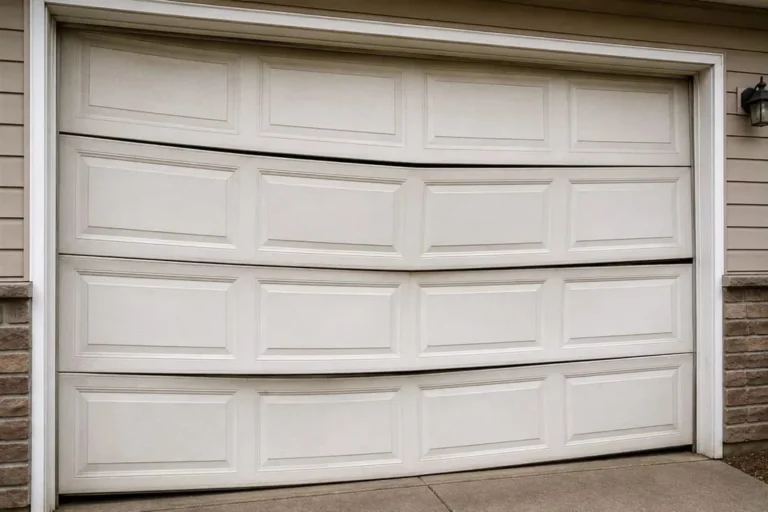
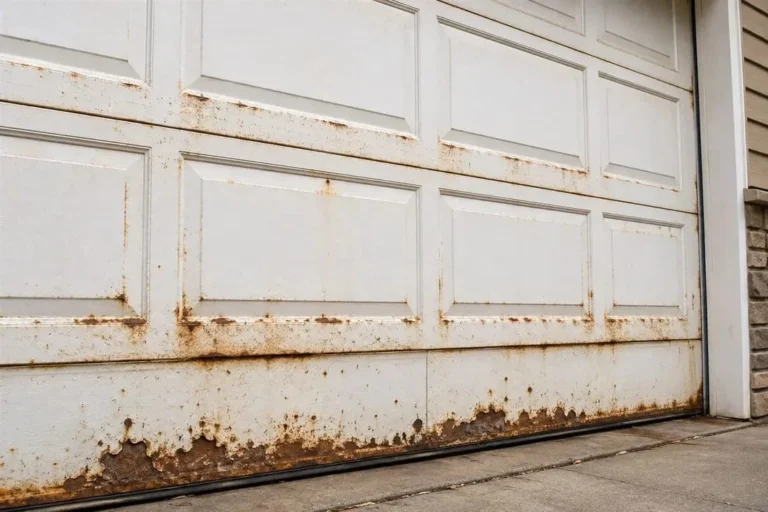
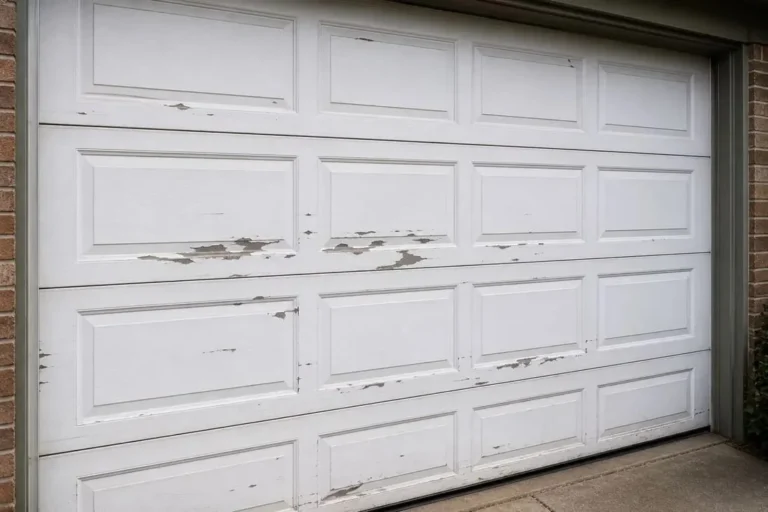
• Bumper dents in the bottom section are the most common, and usually an easy single-panel job.
• Warped or bowed sections from heat and age stop the door from sealing and can make it bind.
• Rust along the bottom comes from sprinklers, irrigation runoff, and monsoon water pooling against the door.
• Peeling, chipped, or sun-baked paint is cosmetic. It can often be repainted rather than replaced.
| Situation | Usually the best fix |
|---|---|
| Small, shallow dent with no crease | Push out or fill and paint |
| Creased, cracked, or rusted-through section | Replace that panel |
| Top section bowing where the opener attaches | Add or replace the reinforcement strut |
| Impact also bent the track or snapped a cable | Panel plus cable and track repair |
| Two or more sections damaged, panels discontinued, or an old uninsulated door | Replace the whole door |
If you’re leaning toward a full replacement, our guide to the signs it’s time to replace your garage door helps you decide.
A new panel arrives in the manufacturer’s factory color. If your door has spent years facing the Gilbert sun, its finish has faded, so even a perfect style match can look slightly brighter at first. You have a few options:
• Accept a slight difference. On white and almond doors, the most common colors here, it’s often barely noticeable.
• Paint the whole door after the swap so every section matches. A properly prepped steel door takes exterior paint well.
• Choose a new door if several sections are faded, chalky, or peeling anyway.
Matching starts with knowing exactly what door you have. Look on the inside of the door for a manufacturer’s label, usually on one of the sections near an edge or on the bottom section. Common brands include Clopay, Amarr, Wayne Dalton, and CHI. If the label is missing or faded, a technician can usually identify the door from the panel design, thickness, and hardware. Photos of the inside and outside of the door, plus its width and height, speed up the quote.
1. Inspect and identify. The technician confirms that only the panel is damaged and identifies the brand, model, and color.
2. Source the match. The matching section is ordered. Depending on the manufacturer, this can take anywhere from a few days to a few weeks.
3. Swap the section. With the door secured, the damaged section is removed and the new one installed. The swap itself is typically a 1–2 hour job.
4. Align and test. Tracks, rollers, and hardware are re-aligned, the door is re-balanced, and the opener’s safety reverse is tested.
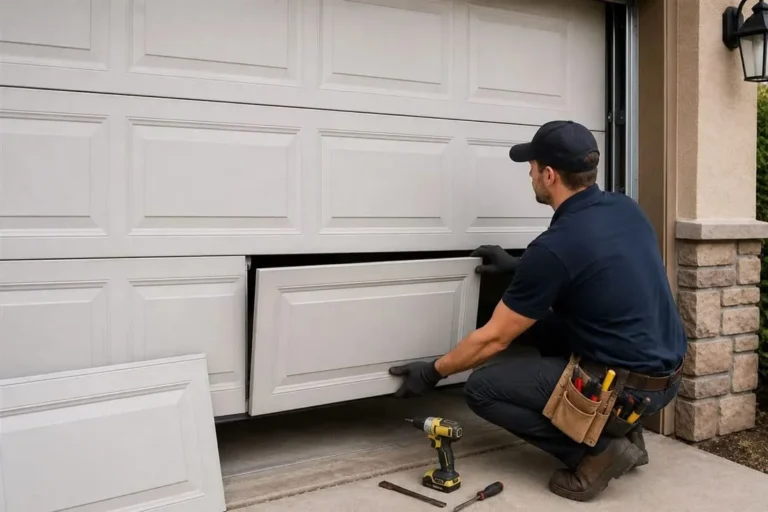
Swapping a panel means working on a door held by springs and cables under tension, so it’s not a safe DIY project. A yearly tune-up afterward keeps the repaired door running smoothly.
Sometimes. Homeowners insurance may cover sudden damage, such as a vehicle impact or a storm, depending on your policy and deductible. If someone else’s car hit the door, their auto insurance may pay instead. Wear, rust, and sun damage generally aren’t covered. With a deductible of $500 or more, a single-panel repair is often cheaper to pay for directly, so get the quote first and then decide whether to file a claim.
Call (480) 896-9802 and have photos of the damage and the inside of your door handy. We’ll connect you with a local technician who can confirm the match and give you a flat price for garage door panel replacement before any work begins, in Gilbert and nearby Mesa and Chandler.
Replacing a single garage door panel typically costs $250–$800 in Gilbert, installed. Basic steel sections sit at the lower end, while insulated, windowed, wood-look, or custom sections cost more. Extra damage to the tracks, rollers, or cables adds to the price.
Yes, if a matching panel is still made for your door’s brand, model, size, and design, and the rest of the door is in good shape. The bottom section is the one most often replaced on its own.
The style can usually be matched exactly, but a new panel comes in the factory color while an older door has often faded in the sun. On white and almond doors the difference is often minor. Painting the whole door after the swap gives a perfect match.
Replacing one panel is almost always cheaper than a new door. Once two or more sections need replacing, the panels are discontinued, or the door is old and uninsulated, a new door often becomes the better value.
The swap itself typically takes 1–2 hours. Ordering a matching section can take anywhere from a few days to a few weeks, depending on the manufacturer and the design.
It may cover sudden damage such as a vehicle impact or storm, depending on your policy and deductible, and another driver’s auto insurance may pay if they hit the door. Wear, rust, and sun damage generally aren’t covered.


